
The Chilling Case of Benjamin "Tony" Atkins — Detroit's Woodward Corridor Killer
Between 1991 and 1992, Detroit lived in fear of a predator who preyed on the city's most vulnerable women. Benjamin Tony Atkins — dubbed the Woodward Corridor Killer — murdered 11 women in just nine months, leaving their bodies in vacant buildings across Highland Park, then one of the most dangerous pockets of an already troubled city.
A Childhood Built for Tragedy
Born August 26, 1968, in Detroit, Atkins' early life was marked by abandonment and abuse. His mother left him when he was just two years old, and he cycled between her care and a boys' home for much of his childhood. At age 10, he was raped by a caseworker — a betrayal from someone meant to protect him. By adulthood, Atkins was homeless and addicted to crack cocaine, drifting through a life with little structure or stability.
A Nine-Month Killing Spree
Atkins' first known victim, Darlene Saunders, survived his attack in October 1991 — a survival that would later prove pivotal. Over the following months, he raped, strangled, and sodomized ten more women, most of them sex workers struggling with addiction themselves. Victims were discovered in motel rooms and abandoned buildings; in one especially disturbing case, three bodies turned up in the same motel on the same day.
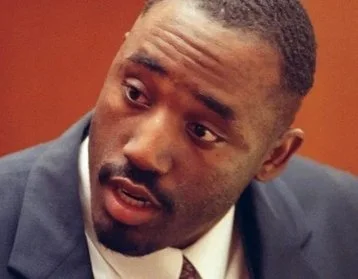
Benjamin in court
The Investigation
As the body count climbed, a multi-agency task force — including Highland Park police, Detroit Homicide, Michigan State Police, and the FBI — was formed, though internal friction slowed progress. The break came when investigators tracked down Darlene Saunders, who identified her attacker as "Tony." Cross-referencing police records led them to Benjamin Atkins.
Ironically, police had already crossed paths with Atkins weeks earlier, questioning him for trespassing while he slept in an abandoned building — but let him go with a citation.
The Confession
Arrested on the trespassing charge, Atkins initially denied everything, even claiming to be gay to deflect suspicion. The interrogation turned when Detective Sergeant Ronald Sanders took a fatherly approach, telling Atkins, "You never had a father... talk to me." While eating cheeseburgers, Atkins confessed — admitting to all 11 murders and revealing a victim's body hidden beneath a vacant garage that investigators hadn't yet found.
Trial and Death
Despite his attorney's efforts to portray Atkins as a product of his abusive upbringing, he was convicted on all 11 counts of first-degree murder on May 11, 1994, and sentenced to 11 life terms. He never served the full sentence — Atkins died in prison just three years later, on September 17, 1997, from HIV-related complications.
Closure, Decades Later
One victim remained a Jane Doe for over 30 years until 2023, when Identifinders International, funded by Gray Hughes Investigates, used forensic genetic genealogy to identify her. At her family's request, her identity remains private — a final act of privacy and peace granted to those left behind.
For listeners wanting a deeper dive, The Crack City Strangler: The Homicides of Serial Killer Benjamin Atkins by B.R. Bates was released in 2025 and is available in print, audiobook, and Kindle formats.
Listen to BLACK TRUE CRIME PODCAST cover this case below: